
In a major development that has far-reaching consequences for the judiciary’s integrity, the Higher Education Commission (HEC) has officially corroborated Karachi University’s (KU) disclosure that Supreme Court Justice Tariq Mehmood Jahangiri had secured an LLB degree through “unfair means.” The report, which was laid down before the Islamabad High Court (IHC), takes initial allegations from an infrequently cited internet blog and breathes life into them with the weight of a staunch official position by Pakistan’s top education regulatory body—one that now directly darkens the academic credentials of a sitting Supreme Court judge. This validation takes a university-level inquiry and makes of it a constitutional and legal crisis, one that undermines the most fundamental qualifications one must have to sit on the nation’s highest bench.
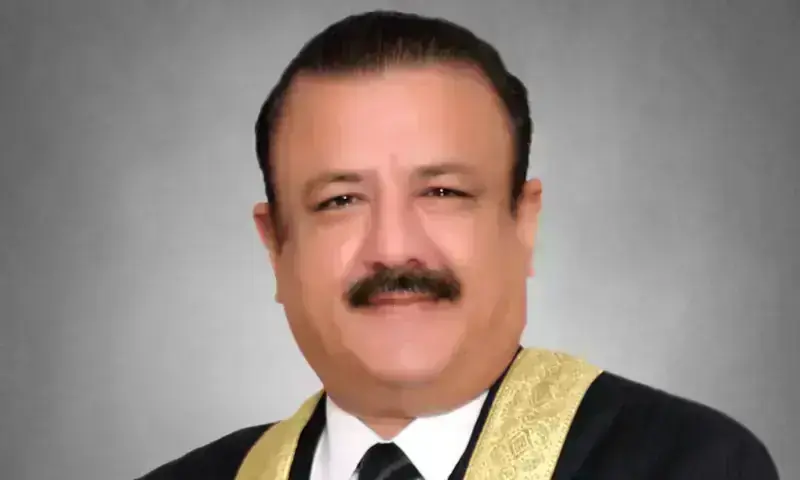
The scandal has led to the issue of an assault on the core of judicial integrity, as an LLB degree is a mandatory qualification for appointment in the superior judiciary under Article of the Constitution. The HEC’s agreement with KU’s findings adds tremendous pressure on the court to make up for a judge’s required qualification and an undeniably questionable degree. That clears the way for a legal and moral confrontation that will challenge accountability in Pakistan’s power echelons. The Higher Education Commission (HEC) has officially backed the findings of Karachi University (KU) in what has repercussions for Pakistan’s judiciary, asserting that Supreme Court Judge Justice Tariq Mehmood Jahangiri’s LLB degree was procured in a manner that was “unfair.”
The HEC report, which was submitted before a division bench of the IHC in connection with a pending lawsuit, further reinforces KU’s concerns and allegations, raising serious question marks over the academic credentials of a sitting judge of an apex court.
Background of the Case
The dispute erupted after an internal verification by Karachi University found Justice Jahangiri’s LLB to be dubious. It has been learned that the university’s inquiry committee found deviation in the academic record as well as in the procedure under which the degree was granted—a preliminary finding of “unfair means.”
Its plea was later heard by the Islamabad High Court, which asked for a conclusive report on it from HEC—the top higher education regulator in Pakistan. Following its own comprehensive inquiry, the HEC has agreed with the conclusions of KU.
HEC Report: Important Points Summary Key findings of the report 1
A copy of the report is part of the public court record, though the full contents are not. A source indicated what some HEC members found: _CAMERA14 1 that
Academic record discrepancies: Problems with attendance records or exam sheets connected to Justice Jahangiri’s LLB degree.
University Violation: The procurement and granting of the degree was in contravention to statutes and rules of Karachi University that prevailed at the time.
Supporting ‘Unfair Means’: The HEC, in no uncertain terms, supported KU’s perception that the degree was not acquired on merit through study, thereby confirming the crux of the point.
Legal and Constitutional Implications
Justice Tariq Mehmood Jahangiri became a judge of the Supreme Court in [Appointment Year]. Holding a recognized law degree is a basic criterion to be considered eligible for appointment as a judge of the superior judiciary.
An established determination that a degree is academically worthless raises serious issues:
Fitness to remain in office: It carries in it the potential of questioning the fundamental legitimacy of Justice Jahangiri as having been appointed and/or remaining a judge of the Supreme Court.
Judicial Integrity: The scandal has an adverse impact on the perceived integrity of the institution when it is essential for citizens to trust state institutions.
Outcome: This could result in a potential reference to the SJC, which is empowered under the Constitution to take cognizance of alleged misbehavior or incapacity of superior court judges, and/or force the judge to resign voluntarily. It also attaches great importance to the continuation of these proceedings in the IHC.
Reactions and Next Steps
Justice Jahangiri’s representatives have previously denied all accusations, saying they may be politically motivated. His lawyers are prepared to challenge the HEC report’s findings aggressively in the IHC.
Legal experts are split over how to proceed procedurally from here. “The report of HEC is a brutally credible verdict coming from the country’s premier education institution,” said senior counsel Abid Saqi. “Now we are facing a constitutional problem, which the judicial hierarchy knows to handle very seriously.”
On the other hand, another constitutional law expert, Dr. Farooq Hassan, advised that people should not be hanged before being proven guilty. He said, “The report is damning, but due process needs to be followed.” The IHC is to hear him too, and if deemed appropriate, also before the Supreme Judicial Council.”
Civil society organizations and transparency groups have urged that the action be swift and transparent. “This is a litmus test for Pakistan’s adherence to the rule of law,” said a statement from the Pakistan Institute of Legislative Development and Transparency (PILDAT). “Absolutely no compromise can be made on the basic qualifications and integrity of those serving on the country’s highest court.
The Road Ahead
The IHC will take up the matter for further hearing after receiving this final report from HEC. Its decision had the potential to pave the way for a constitutional crisis of historic proportions or offer a legal resolution to the dispute.
The SCOTUS as a body of people is in a sidesplittingly awkward position between judicial independence, justice for one of their own, and the enormously overwhelming weight of whatever they do against institutional credibility.
The next several weeks
The next several weeks are likely to be consumed by fierce legal arguments, heightened public scrutiny, and a reckoning for Pakistan’s judicial system with the charges that go directly to whether a judge is fit to serve.
Conclusion:
The HEC’s final act is unequivocal, culminating in the sharpest responsibility shift for Pakistan’s courts to now deal with this unprecedented challenge. The further course from here depends on the proceedings before the Islamabad High Court and perhaps subsequent submission to the Supreme Judicial Council of Pakistan, with an outcome that should reconcile a fair procedure for those accused against salient principles of preserving sacredness and respect for the judicial process. The results will not only decide the fate of Justice Jahangiri but also establish an important precedent around transparency, credentialing, and holding high-level offices accountable in the highest reaches of Pakistan—ultimately shaping public trust concerning the rule of law within decades to come.
Please read the related post: Jitesh Sharma – Full Biography, Age, Education, Family & Complete Cricket Performance Review
One Response